







































Effectively combating moth caterpillars: Natural solutions for your garden
Moth caterpillars in the garden can weaken plants significantly in a short time – especially if many are feeding on leaves, shoot tips, or young vegetable plants at the same time. If you want to combat moth caterpillars, the most important rule is: detect early and act targetedly – preferably using natural methods that protect beneficial insects and keep the garden in balance.
Causes: Why do moth caterpillars appear in the garden?
Moth caterpillars are the larvae of butterflies and moths. The adult insects lay their eggs on suitable plants – often exactly where the caterpillars will later feed. Warm weather, an abundance of food, and few natural predators promote a heavier infestation.
Typical triggers for a heavy infestation
- Many egg depositions in a short time (e.g., during warm, dry periods)
- Protection and hiding spots (dense plant growth, weeds, mulch)
- Few predators (e.g., few birds, parasitic wasps, ladybugs, spiders)
- Sensitive young plants in the vegetable patch or on the balcony
Recognition: How can you identify moth caterpillars?
Often, the feeding damage is noticed first – and only then do you discover the caterpillars themselves. Depending on the species, moth caterpillars are green, brownish, grayish-brown, or patterned. Many hide during the day on the undersides of leaves or in rolled-up leaves.
Typical signs of caterpillar feeding
- Irregular holes in leaves, eaten leaf edges
- Fecal droppings (small dark dots) on leaves or surfaces below
- Egg clusters on the undersides of leaves (varies by species)
- Rolled-up leaves, webs, or "glued-together" leaf areas
🐛 Tip: Check early in the morning or in the evening – many moth caterpillars are more active and easier to spot then. Checking once a week prevents a small infestation from "exploding".
Combatting: Natural measures that really help
In a home garden, the goal is rarely to "wipe out everything," but rather to reduce the infestation so that plants can recover and continue to grow healthily. You will achieve the best results by combining several measures.
1) Hand-picking & removing affected plant parts
- Pick caterpillars directly off the leaves (gloves are optional).
- Prune heavily infested leaves/shoots (to relieve the plant).
- Wipe off/remove eggs from the undersides of leaves if visible.
2) Protecting plants instead of just "spraying"
- Vegetable protection nets over cabbage, lettuce & young beds – prevents egg laying.
- Watering and fertilizer care: strong plants withstand feeding better.
- Tidy edge zones: reduce weeds & hiding places.
3) Promoting beneficial insects (most effective in the long run)
- Flowering plants (umbellifers, herb flowers) as a food source for beneficials.
- Bird baths/nesting opportunities – birds love feeding on caterpillars.
- No broad-spectrum insecticides – they also harm your helpers.
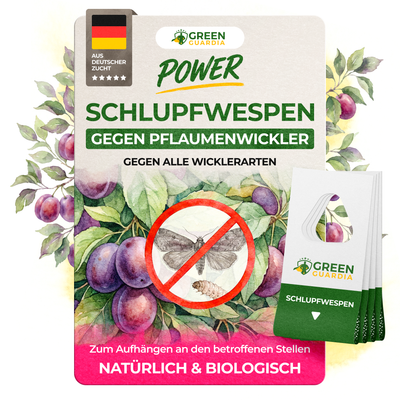
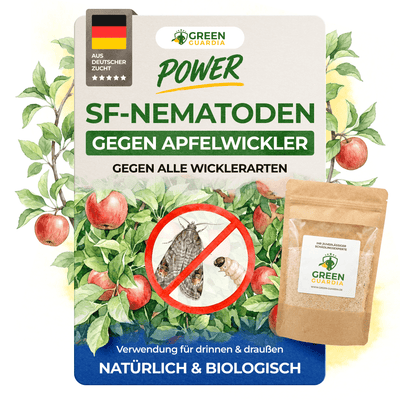
If you are unsure which species is eating your plants, you can find further help and suitable solutions for your infestation situation at greenguardia.de.
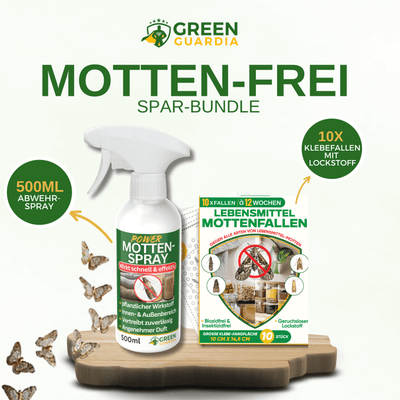
🧺 Important (common confusion): In the garden, "moth caterpillars" are usually real caterpillars on plants. However, if you discover caterpillars in your pantry (e.g., in flour, muesli, nuts), they are often pantry moth larvae. For this, parasitic wasps against pantry moths are a particularly gentle, proven solution – ideal for the kitchen because they target the moth eggs directly.
Prevention: Keep your garden caterpillar-free
Prevention primarily means making it harder for insects to lay eggs, strengthening plants, and supporting natural predators. This reduces the likelihood that moth caterpillars will become a recurring problem.
Prevention checklist
- Regularly inspect (undersides of leaves, shoot tips, rolled-up leaves).
- Use protection nets for sensitive crops during infestation periods.
- Plant variety: mixed cultivation & herb strips support beneficial insects.
- Garden gently: No unnecessary spraying – beneficial insects are your "permanent team".
Frequently asked questions about moth caterpillars
When should I take action against moth caterpillars?
It is best to start immediately at the first sign of feeding damage. The smaller the caterpillars and the earlier you remove eggs, the easier it is to contain the infestation – often, hand-picking plus a protection net is sufficient.
Which plants are most frequently affected?
Vegetables (e.g., cabbage varieties, lettuces), herbs, and ornamental plants are often affected. The exact species that is eating them depends heavily on the region, season, and assortment of plants. Check young, soft shoots in particular.
How do I distinguish garden caterpillars from pantry moth larvae?
Garden caterpillars usually sit directly on plants and cause visible leaf damage. You are more likely to find pantry moth larvae in stored dry goods (flour, muesli, nuts) or on cupboard edges with webbing. For moths in the kitchen, parasitic wasps against pantry moths are a very targeted, natural form of support.
What is the best long-term help?
The combination of regular inspections, protection nets for sensitive crops, and the promotion of beneficial insects (flowering plants, nature-friendly corners, no broad-spectrum insecticides) is the most stable approach in the long term.
Take action now:
Check your plants today for eggs, feeding damage, and hidden caterpillars – and start with hand-picking, protective measures, and insect-friendly care. If the "caterpillar infestation" is actually happening in your pantry, parasitic wasps against pantry moths are a suitable, natural solution for the kitchen. Further information and suitable products can be found at Green Guardia.


