































































'Vanille Fraise' panicled hydrangea – care, location, growth & FAQs
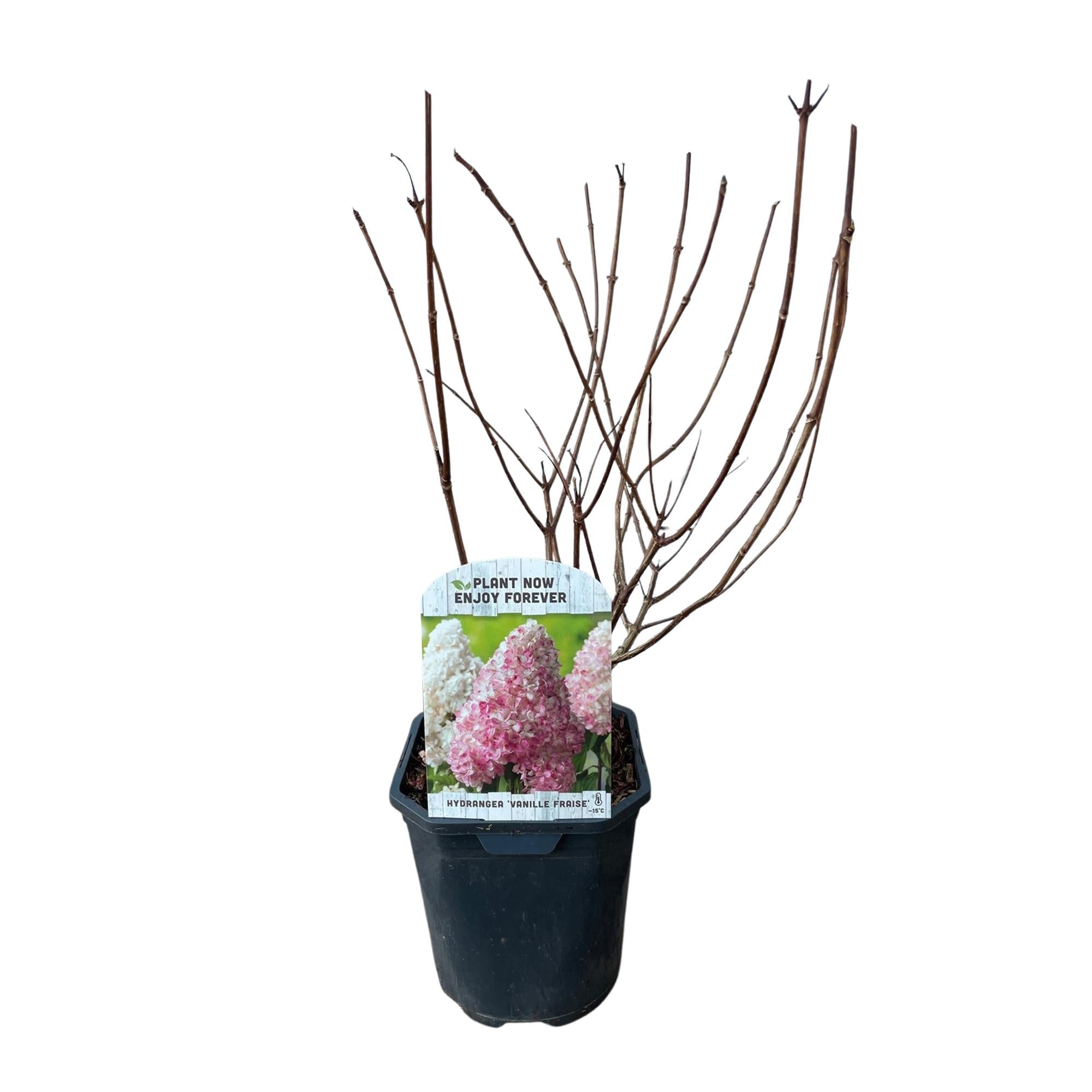
The 'Vanille Fraise' panicled hydrangea (Hydrangea paniculata) delights with its large, cone-shaped flowers that change from creamy white to delicate pink and later to a vibrant strawberry red. This deciduous hydrangea is robust, hardy, and a real eye-catcher in the garden.
As a vigorous young plant in a 17 cm pot with a height of approx. 50 cm, it is ideal for flower beds, front gardens, or as a standalone plant. The 'Vanille Fraise' panicled hydrangea in a 17 cm pot produces sturdy flower panicles in its very first year.
Origin & characteristics of the 'Vanille Fraise' panicled hydrangea
Where does Hydrangea paniculata come from?
The panicled hydrangea originally comes from East Asia. Unlike mophead hydrangeas, it blooms on new wood – which makes it particularly easy to prune and care for.
- Deciduous ornamental shrub
- Growth height: approx. 1.5–2 meters
- Large, sturdy flower panicles
- Very hardy
The 'Vanille Fraise' variety impresses with its intense color change during the flowering period from July to October.
Appearance & growth of the hydrangea
How fast does the panicled hydrangea grow?
The plant grows rapidly and forms strong, upright shoots. As it ages, the shrub becomes broader and bushier.
A healthy starting point is provided by a strong young plant like the Hydrangea paniculata 'Vanille Fraise' .
The right location for panicled hydrangeas
What is an ideal location?
- Sunny to semi-shady
- Nutrient-rich, humus-rich soil
- Good drainage, no waterlogging
- Wind-protected for young plants
Unlike many other hydrangeas, the panicled hydrangea can tolerate more sun – provided the soil remains consistently moist.
Caring for & pruning the 'Vanille Fraise' panicled hydrangea
How often should you water?
Water regularly, especially in the first year. Later on, the plant is relatively robust, but needs extra water during prolonged periods of drought.
When should you prune panicled hydrangeas?
Pruning should be done in early spring (February/March). Since it blooms on new wood, a vigorous prune encourages large flower panicles.
With a vigorous plant like the 'Vanille Fraise' panicled hydrangea you lay the foundation for long-lasting floral beauty.
Common problems & solutions
Why are the leaves turning yellow?
Yellow leaves can indicate waterlogging or nutrient deficiency. Loosening the soil and applying organic fertilizer will help.
Why do the flowers droop?
Shoots that are too weak or a lack of pruning can cause heavy flowers to hang down. A strong spring prune ensures stable shoots.
Propagation
How can you propagate panicled hydrangeas?
Propagation is done via cuttings in the summer. For true-to-type quality, however, a certified young plant is recommended.
Prevention & long-term care
A sunny location, regular pruning, and a balanced supply of nutrients ensure lasting vigorous growth and intense flower colors.
Common questions about the 'Vanille Fraise' panicled hydrangea
Is the panicled hydrangea hardy?
Yes, Hydrangea paniculata is very hardy and can withstand even severe frosts without any problems.
Does the hydrangea bloom every year?
Yes, because it blooms on new wood, it reliably develops new flowers every year with proper pruning.
Can you keep panicled hydrangeas in a pot?
Yes, with a sufficiently large pot and a good water supply, it is also suitable for a terrace or balcony.
Take action now:
The 'Vanille Fraise' panicled hydrangea combines robust characteristics with a spectacular color change. With the right location and an annual prune, it will reward you for many years with impressive flowers.
Start with a vigorous 'Vanille Fraise' panicled hydrangea and bring vibrant color gradients to your garden.